
How to Plan a Vietnam Trip from India Under ₹45,000 (2026 Edition)
Let’s be honest—if you have scrolled through Instagram lately, you have probably seen a reel of someone cruising through Ha Long Bay or sipping coffee in Hanoi. Vietnam has quickly become the “new Thailand” for Indian travelers, and it makes total sense. It is stunning, the food is incredible, and the visa process is now easier than ever.
But before you pack your bags, there is one big question: How much budget do you actually need? If you are calculating the Vietnam Trip Cost from India 2026, you have come to the right place.
Is it really as cheap as everyone claims? Can you actually manage a trip there for less than the cost of a luxury trip to Goa?
I have crunched the numbers for 2026 to give you a realistic answer. Whether you are a backpacker looking to save every rupee or someone who wants a comfortable vacation, this guide will break down the exact cost—from flights and visa fees to food and stay. Let’s do the math.
You might also like the Safest Solo Travel Destinations 2026
Getting There: Flights & Visa Costs
Before you start dreaming about the lantern-lit streets of Hoi An, let’s tackle the boring (but most expensive) part first: how do you get there, and what documents do you need?
The Visa: Simple & Paperless
Gone are the days of embassy visits. The best thing about planning a Vietnam trip in 2026 is that the visa process for Indians is completely online and hassle-free.
- Type: E-Visa (Valid for up to 90 days).
- Cost: Approx. $25 USD (₹2,100 – ₹2,300).
- Process: Apply on the official immigration portal, pay the fee, and you usually get the approval letter within 3-5 working days.
Note: Be careful with third-party agent websites that look official but charge double the fees. Always use the official government portal.
Flights: Timing is Everything
This will be 50% of your total trip budget, so saving money here means you have more to spend on shopping and food.
Direct flights are now available from major Indian cities like New Delhi, Mumbai, and Ahmedabad to Hanoi or Ho Chi Minh City.
- Budget Airlines (VietJet): If you book 2-3 months in advance, you can snag a return ticket for as low as ₹18,000 – ₹22,000.
- Full-Service Airlines (Vietnam Airlines/Indigo): These usually cost between ₹26,000 – ₹35,000 but include meals and luggage.
Pro Tip for 2026:
If you are flying with a budget carrier like VietJet, watch out for the baggage policy. Their cheapest tickets often include only 7kg cabin baggage. If you plan to shop (which you definitely will!), pre-book your check-in luggage online. It costs much more if you pay at the airport counter.
Accommodation: Hostels vs. Hotels
Here is the best part about travelling to Vietnam: you don’t have to compromise on comfort to save money. Unlike Europe or even parts of India, your money goes a very long way here. Whether you are a solo backpacker or a couple looking for privacy, here is what to expect.
Option A: The Backpacker (Hostels)
If you are travelling solo or just want to save cash, Vietnam’s hostel culture is world-class. We aren't talking about dirty, cramped rooms. Most hostels here are modern, clean, and come with air-conditioning and great WiFi. Vibe: Very social. Great places to meet other travellers. Average Cost: ₹600 - ₹900 per night for a bed in a good dorm.
Option B: The Comfort Seeker (Private Hotels)
If you prefer your own space, you will be surprised by the luxury you can get for a budget price. A decent 3-star hotel with a pool and breakfast often costs less than a basic guest house in Goa. Vibe: Relaxing, private, and comfortable. Average Cost: ₹2,200 - ₹3,500 per night for a double room (divide this by 2 if you are sharing!).
Smart Stay Tip: Location is Key! In Hanoi, try to book a hotel in the “Old Quarter”. In Ho Chi Minh City, look for “District 1”.
Why? These are the city centers. If you stay here, you can walk to most cafes, markets, and lakes, saving you a lot of money on taxis every day.
Food & Local Travel (The Daily Spend)
Food: Street vs. Indian Restaurants
- Street Food (The Budget Way): You cannot visit Vietnam without trying Pho (noodle soup) or Banh Mi (sandwich). It is delicious, hygienic, and super cheap. A hearty meal costs just ₹150 – ₹250.
- Indian Food (The Expensive Way): If you miss Dal Makhani or Roti, be prepared to pay a premium. Indian restaurants in Vietnam are considered “exotic” and “fancy.” A standard Indian meal can cost ₹800 – ₹1,200 per person.
Getting Around: Use "Grab"
Forget about haggling with taxi drivers who don’t speak English.
- Download the “Grab” App: It is the Uber of Southeast Asia. You can book bikes (cheaper) or cars.
- Cost: A 5km bike ride costs around ₹100, and a car ride costs around ₹200 – ₹300. It is transparent and safe.
Must-Do Activities & Entry Fees
1. Ha Long Bay Cruise
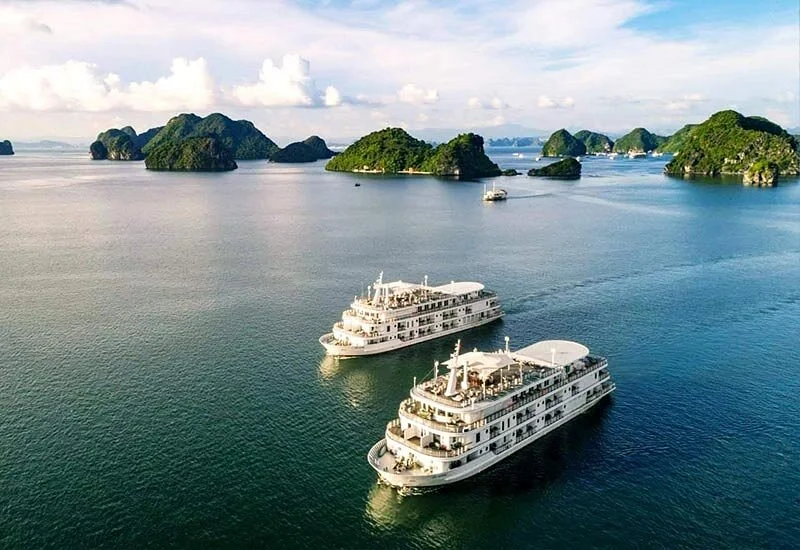
You cannot skip this. It is a UNESCO World Heritage site and honestly, the photos don’t do it justice.
a) Day Cruise (4-6 Hours): Perfect if you are short on time. Includes lunch and kayaking.
- Cost: Approx. ₹3,500 – ₹4,500 per person.
b) Overnight Cruise (2 Days, 1 Night): The real experience. You sleep on the boat in the middle of the sea.
- Cost: Starts from ₹10,000 – ₹15,000 per person (includes all meals).
2. Ba Na Hills (Golden Bridge)

This is where you see those famous “Giant Hands” holding a bridge.
- Ticket Price: The cable car ticket is expensive but includes entry to the Fantasy Park and the Golden Bridge.
- Cost: Approx. ₹3,300 – ₹3,500 (1,000,000 VND) per person.
- Buffet Combo: Add another ₹1,000 for a massive lunch buffet (highly recommended as food is costly up there).
Other Essential Tickets
- Hoi An Ancient Town: You need a ticket to enter the heritage zone.
- Cost: ₹400 (120,000 VND).
- War Remnants Museum (Ho Chi Minh City): A must-visit history spot.
- Cost: ₹130 (40,000 VND).
- Cu Chi Tunnels: Experience the underground war tunnels.
- Cost: ₹350 (110,000 VND).
The "Hidden" Essentials (SIM, Forex & Insurance)
1. SIM Card (Buy Local): Do not make the mistake of activating international roaming on your Indian number (Jio/Airtel packs are expensive). Instead, buy a local SIM card (Viettel or Vinaphone) right at the Vietnam airport. It costs around ₹700 – ₹900 for unlimited high-speed data.
2. Currency (The USD Hack): Do not buy Vietnamese Dong (VND) in India because the rates are terrible. Instead, convert your Rupees to US Dollars (USD) here in India. Once you reach Vietnam, exchange those Dollars for VND at the airport or gold shops for the best rates.
3. ATM Withdrawals: If you have a zero-forex card (like Niyo, Scapia, or Fi), you can withdraw cash directly from ATMs in Vietnam. It is often cheaper than exchanging cash.
4. Travel Insurance: It is not mandatory for the visa anymore, but highly recommended. One hospital visit can cost lakhs, while a good policy for 7 days costs just ₹500 – ₹700.
The Final Calculation: Total 7-Day Budget
Option A: The Smart Saver (Backpacking Style)
This budget assumes you book flights during a sale, stay in good hostels, and eat street food.
- Flights (VietJet Sale): ₹20,000 – ₹22,000
- Visa (E-Visa): ₹2,300
- Accommodation (Hostels): ₹5,000
- Food (Street Food + Coffee): ₹6,000
- Transport (Grab Bike + Bus): ₹3,000
- Activities (Entry Fees): ₹4,000
- Misc (SIM + Insurance): ₹1,500
GRAND TOTAL: Approx. ₹42,000 – ₹45,000
Option B: The Comfort Lover (Relaxed Style)
This budget is for couples or families wanting private hotels, Indian meals, and a luxury Halong Bay cruise.
- Flights (Standard/Direct): ₹28,000 – ₹30,000
- Visa (E-Visa): ₹2,300
- Accommodation (3-Star Hotels): ₹15,000
- Food (Restaurants/Indian Food): ₹12,000
- Transport (Grab Car + Taxis): ₹6,000
- Activities (Includes Overnight Cruise): ₹15,000
- Misc (SIM + Shopping): ₹5,000
GRAND TOTAL: Approx. ₹80,000 – ₹85,000
Conclusion: Is it Worth it?
Absolutely. Even with the rising prices in 2026, Vietnam remains one of the few places where the Indian Rupee feels powerful. You can get a luxury experience here for the price of a standard trip to many other countries. So, stop overthinking, book that flight, and get ready for the best coffee of your life!
Here you can also check Heligoland Archipelago in Germany
Frequently Asked Questions (FAQs) about Vietnam Trip Cost from India 2026
1. Is Vietnam cheaper than India for tourists?
In many ways, yes. While flight tickets make the initial cost look high, the daily expenses in Vietnam are very low. Accommodation, street food, and beer are often cheaper than in Indian metro cities like Mumbai or Bangalore. You can get a good hostel bed for ₹700 and a meal for ₹150.
2. Can I use Indian Rupee (INR) in Vietnam?
No, the Indian Rupee is not accepted in Vietnam. You cannot exchange it easily there either. The best way is to convert your INR to US Dollars (USD) in India before you leave. Once you arrive in Vietnam, exchange those Dollars for Vietnamese Dong (VND) at the airport or gold shops for the best rates.
3. How many days are enough for a Vietnam trip?
For a first-time trip, 7 to 10 days is perfect. This gives you enough time to visit the main spots: Hanoi (North), Da Nang/Hoi An (Central), and Ho Chi Minh City (South) without rushing too much.
4. Is vegetarian food easily available?
Yes! While Vietnam is famous for meat dishes, almost every restaurant has a “Chay” (Vegetarian) section. You will easily find tofu dishes, vegetable noodles, and fried rice. Plus, there are plenty of Indian restaurants in major cities if you crave home food.
5. Is Vietnam safe for solo female travellers?
Vietnam is considered one of the safest countries in Southeast Asia for solo travellers. Violent crime is extremely rare. However, like any tourist destination, be careful of small scams (like taxi overcharging) and keep your bag safe while walking on busy streets.
6. When is the cheapest time to visit Vietnam?
If you want to save money, avoid travelling in December and January. This is the peak tourist season, and flight prices skyrocket. The best time for budget travellers is during the shoulder months: September to October or April to May. During these times, the weather is pleasant, and you can find flights and hotels at much lower rates compared to the peak winter season.