
Heligoland Archipelago in Germany: Red Cliffs, Seabirds & a Different Side of Europe
Forget the Autobahn and the dense forests for a moment. When you step off the ferry onto the Heligoland Archipelago in Germany, the mainland feels far away—both literally and figuratively. This isn’t your average European getaway. Here, dramatic red sandstone cliffs rise from the rough North Sea. The only ‘traffic’ you’ll see is a colony of grey seals lounging on the white sands of Düne. It is wild, windy, and pleasantly car-free. Whether you’re here to take photos of the famous ‘Lange Anna’ or just enjoy the cleanest air in the country, this hidden gem offers a raw escape you won’t find anywhere else.
You might also like the Safest Solo Travel Destinations 2026
Table of Contents
Where Is the Heligoland Archipelago Located?
You won’t find Heligoland just a few minutes off the coast. It is actually sitting way out in the North Sea, roughly 70 kilometers away from the German mainland. That is quite a distance. When you look out from the edge of the cliffs, you see nothing but water.
Technically, it belongs to the German state of Schleswig-Holstein. But honestly? It feels like its own little country.
Also, the archipelago isn’t just one big rock. It is split into two distinct parts. You have the Hauptinsel (Main Island), which is famous for those tall red cliffs you see in photos. Then, right next to it, is Düne. That one is flat, sandy, and full of wildlife. They used to be connected a long time ago, but a massive storm separated them back in 1721. Now, they sit side-by-side in the middle of the rough ocean.
A Short History of the Heligoland Archipelago in Germany
This tiny island has seen a lot of drama. Seriously, more than you would expect for a rock in the middle of the sea. For a long time, it didn’t even belong to Germany.
The British actually ruled it until 1890. Then, they made a strange deal. They traded Heligoland to Germany in exchange for the island of Zanzibar in East Africa. Sounds like a weird trade, right? But it happened.
Then came the wars. During World War II, the island was turned into a massive fortress. It was full of bunkers and underground tunnels. After the war ended, the British army wanted to destroy those military fortifications completely. So, in 1947, they set off roughly 6,700 tonnes of explosives.
Locals call it the “Big Bang.”
It was one of the largest non-nuclear explosions in history. It shook the earth and changed the shape of the island forever, but Heligoland survived. Today, it is peaceful again. But if you look closely at the landscape, you can still see the scars from that explosive past.
How to Reach the Heligoland Archipelago in Germany
1. Taking the Ferry (The Most Popular Way)
Most travellers arrive by boat. It is cheaper, easier, and honestly, standing on the deck with the wind in your hair is part of the experience.
- From Cuxhaven (Year-Round): This is the main route. The ferry from here runs all year, even in winter. It takes about 2 to 2.5 hours. If you want a classic experience, this is it.
- From Hamburg (The “Halunder Jet”): If you are in Hamburg, you can take the high-speed catamaran. It is fast, modern, and takes about 3.5 hours directly from the city center (Landungsbrücken). But be warned: it only runs during the main season (usually late March to November).
A quick heads-up: The North Sea can get choppy. If you get seasick easily, pack some medication or stick to the catamaran, which is a bit smoother.
2. Flying (The "Cool" Way)
Yes, you can actually fly here. Small airlines (like OFD) operate flights from airfields like Cuxhaven/Spieka or Büsum. The planes are tiny—usually seating just 8 or 9 people—and the flight only takes about 20 to 30 minutes.
It is more expensive, obviously. But the view from above? Absolutely unbeatable. You land right on the sandy island of Düne, which makes you feel like you are arriving in a James Bond movie.
3. The "Ausbooten" Experience (Good to Know)
In the old days, big ships couldn’t dock at the island. Passengers had to climb down ladders into small wooden boats called Börteboote to get to shore. It was chaotic and fun. Today, most modern ferries (like the Halunder Jet and the MS Helgoland) dock directly at the harbor. But if you take a classic ship during the summer, you might still get to experience this quirky tradition.
Things to Do in the Heligoland Archipelago
1. See the Famous 'Lange Anna'
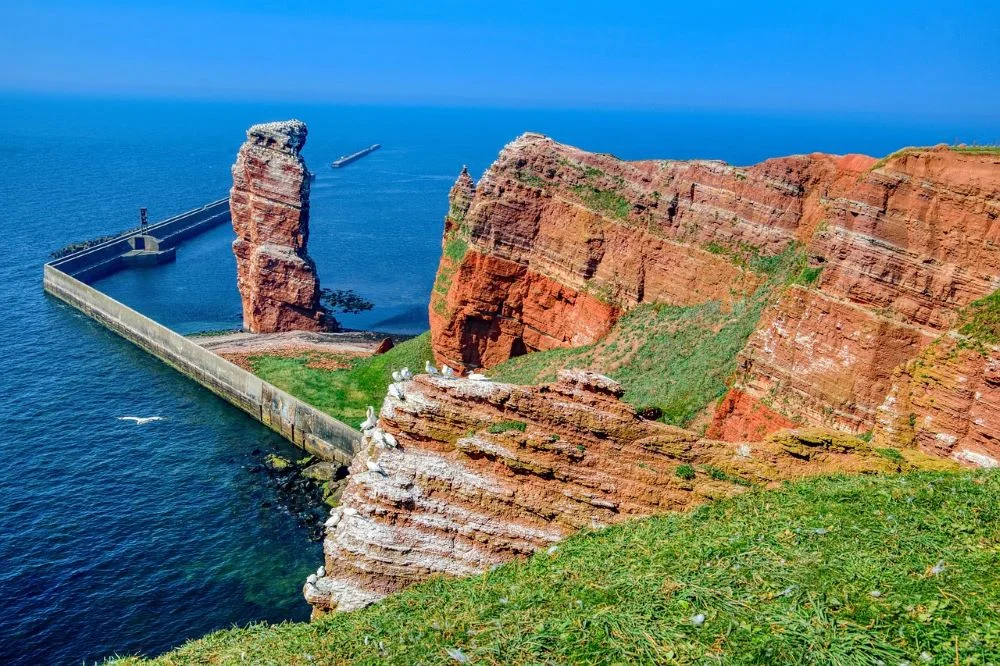
This is the postcard shot. Lange Anna is a massive, 47-meter-tall red rock standing alone in the sea. It looks fragile, like it might tip over any minute (and geologists say it eventually will). You can’t climb it, obviously. But walking along the cliff edge to see it? Incredible. The wind hits you hard up there, and the sound of thousands of seabirds nesting in the rocks is deafening. It is wild and beautiful.
2. Hang Out with Seals on Düne
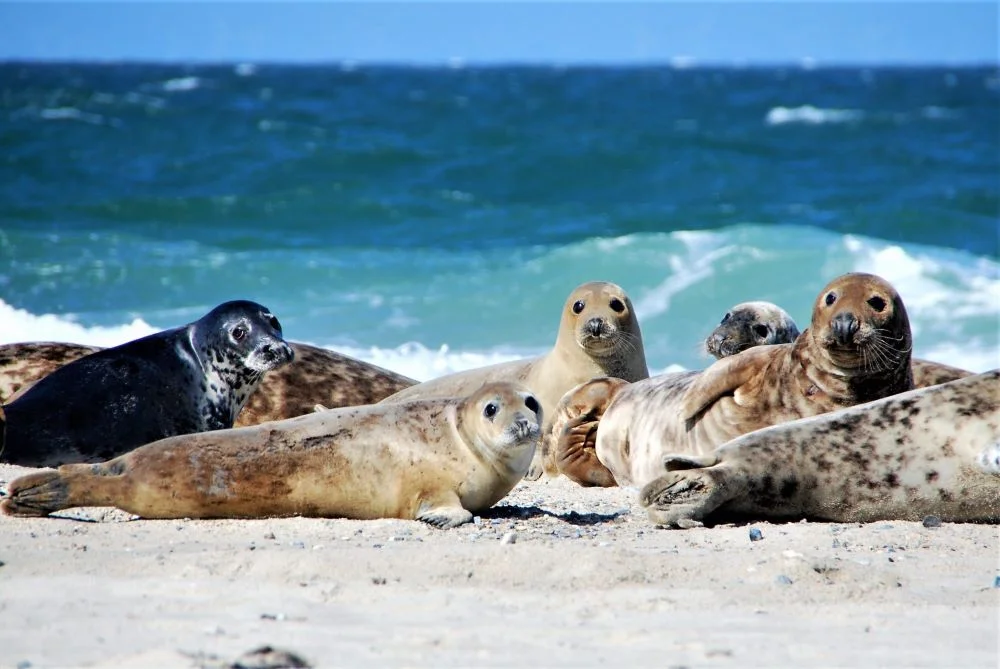
If you only do one thing, do this. Take the little ferry over to the smaller island, Düne. It only takes a few minutes. Once you step off, you are basically on a beach filled with grey seals. They are everywhere. Some are swimming, others are just sleeping on the sand like giant rocks. You can get pretty close—about 30 meters is the rule—but they are wild animals, so don’t try to pet them! Watching them wiggle around on the white sand is honestly the highlight of the trip.
3. Walk the 'Oberland' Circuit
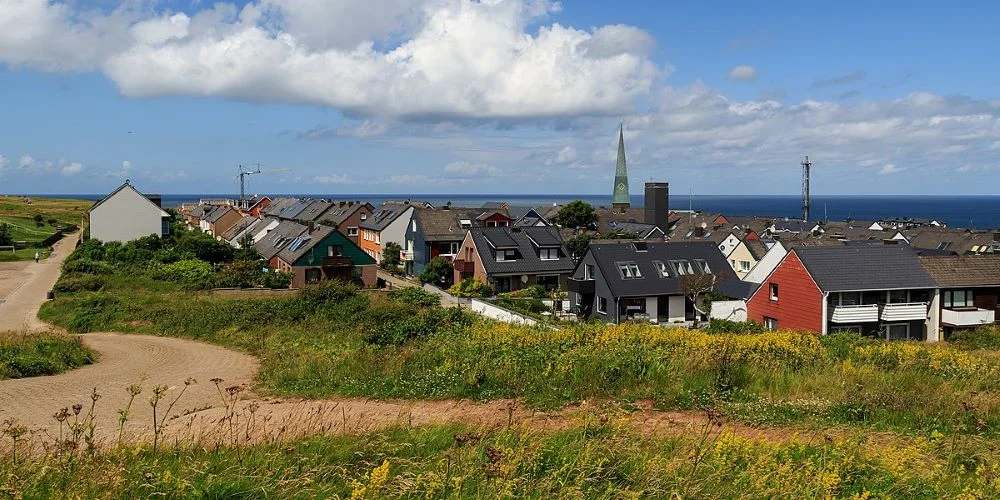
The main island has a flat top called the Oberland. There is a path that loops around the whole thing. It is an easy walk, maybe 3 kilometers total, but the views are ridiculous. On one side, you have the endless blue North Sea; on the other, you have the tiny colorful houses of the town below. Pro tip: Don’t just look at the view. Look down at the grass. You might spot some bomb craters left over from World War II that are now covered in green.
4. Go Underground (Bunker Tours)
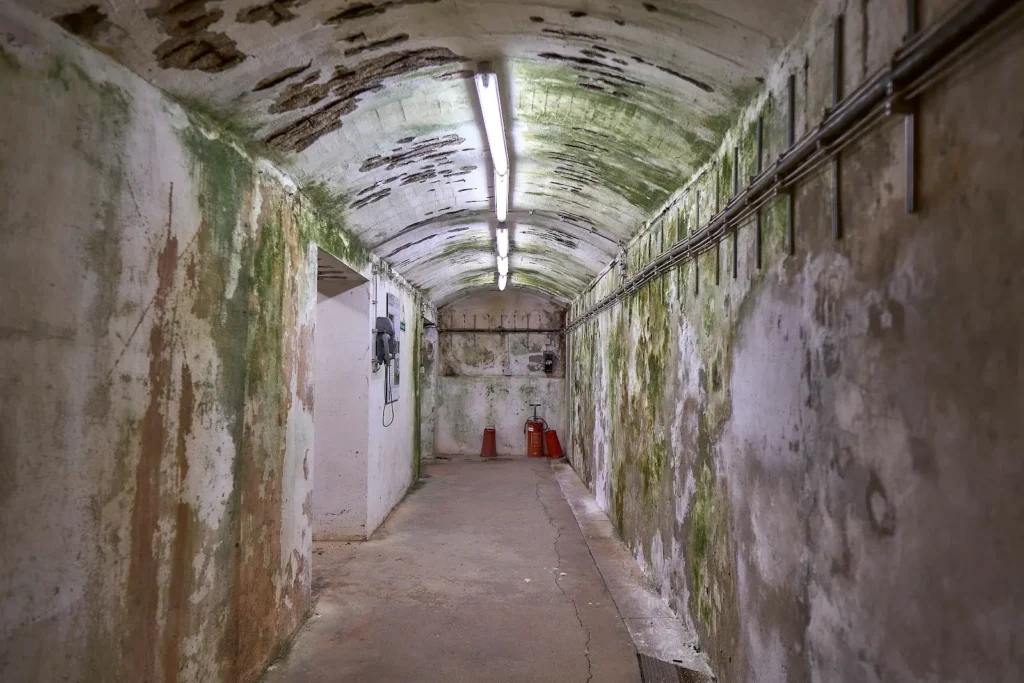
This island wasn’t always peaceful. It used to be a fortress. If you are into history, you have to book a guided bunker tour. You get to go deep inside the tunnels that were dug into the rock to protect the locals during air raids. It is chilly and a bit spooky down there, but hearing the stories of how people survived the “Big Bang” explosion is something you won’t forget. It gives you a totally different respect for the place.
5. Duty-Free Shopping (Yes, Really)
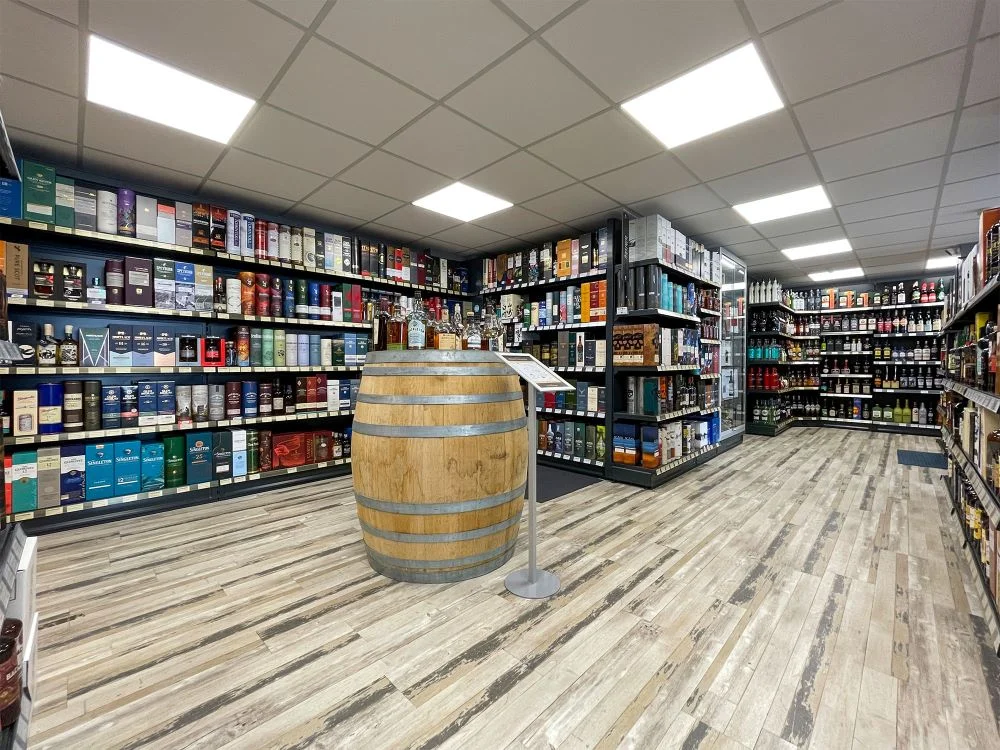
It sounds weird to talk about shopping on a nature trip, but hear me out. Heligoland is tax-free. No VAT. That is why you see so many people dragging empty suitcases off the ferry. They are here to stock up. You can get perfume, expensive whiskey, tobacco, and branded clothes for way cheaper than on the mainland. Even if you don’t buy anything, just walking through the “Lobster Stalls” (colorful wooden shacks turned into shops) is a vibe in itself.
Why is Shopping so Popular Here? (Duty-Free)
It feels a bit strange at first. You arrive on this rugged, windswept nature island, and suddenly, you see people dragging empty suitcases around.
Why? Because Heligoland is a tax haven.
Even though it is part of Germany, it falls outside the European Union’s VAT (Value Added Tax) area. That means you don’t pay the usual taxes on goods. Everything is cheaper.
Here is the deal: People don’t come here for souvenirs like fridge magnets. They come for the expensive stuff. You will see shop after shop selling high-end perfumes, cosmetics, whiskey, gin, and tobacco. Branded clothes and heavy-duty binoculars (for birdwatching) are also huge sellers. Depending on what you buy, the price difference can be serious.
The coolest part is where you shop. Many of these stores are located in the Hummerbuden (Lobster Shacks) along the harbor. These are cute, colorful wooden sheds that used to be for fishermen. Now, they are full of luxury goods.
A fair warning, though: Don’t get too carried away. Since you are technically leaving a “non-EU” zone when you go back to the mainland, German customs (Zoll) are very strict. There are limits on how many cigarettes or liters of alcohol you can take back. If you go over the limit, they will make you pay. So, enjoy the shopping, but check the rules first!
Best Time to Visit Heligoland Archipelago
Honestly, there is no single “right” time to go. It really depends on which version of the island you want to see. Heligoland has a split personality.
1. Summer (June to August) – For the Classic Trip If you want blue skies and mild weather, stick to summer. This is when the island is most alive. All the restaurants are open, the ferries run frequently, and you can actually sit outside without freezing. The downside? It gets busy. Day-trippers from Hamburg flood the island around noon. If you want peace, stay overnight. The evenings are magical once the last ferry leaves.
2. Winter (November to January) – For the Baby Seals This might sound crazy. Why go to a windy, freezing island in winter? Because of the babies. Winter is when the Grey Seals give birth on the Düne island. You will see hundreds of white, fluffy seal pups rolling around in the sand. It is adorable. The weather will be harsh—expect strong winds and rain—but seeing those pups makes it 100% worth it. plus, the island is quiet and cozy.
3. June – For the “Jumping Birds” If you like nature, mark mid-June on your calendar. This is when the “Lummensprung” happens. Thousands of young guillemot chicks (which look like penguins) jump off the tall cliffs into the sea to learn how to swim. It is a chaotic, noisy, and incredible natural spectacle.
Travel Tips for First-Time Visitors
1. Dress Like an Onion (Layers, Layers, Layers) – It doesn’t matter if the weather forecast says “Sunny.” The North Sea wind is relentless. It cuts right through t-shirts. Always bring a windproof jacket or a hoodie you can easily take off if it gets warm. You will thank me later.
2. Prep for the Boat Ride – The North Sea is not a calm lake; it is a rough ocean. If you have a sensitive stomach, don’t risk it. Take motion sickness pills before you get on the ferry, not when you already feel sick. The “Halunder Jet” catamaran is smoother, but the classic ships can really rock.
3. Leave the High Heels at Home – This is a walking island. There are no taxis and no buses. You will be walking on cobblestones, sandy beaches, and up steep cliff paths. Wear your most comfortable sneakers or hiking shoes. Your feet will take a beating.
4. Watch the Clock (If You Are on a Day Trip) – If you are not staying overnight, your time is short. Most ferries arrive around 12:30 PM and leave by 4:00 PM. That only gives you about 3.5 hours. Don’t spend the whole time eating lunch! Plan your walk around the cliffs first, then shop or eat if you have time left.
5. Keep Your Distance from Seals – They look like cute, chubby puppies, but they are wild predators with sharp teeth. Seriously, they bite. The rule is to stay at least 30 meters away. Use the zoom on your camera, not your feet.
6. Cash is Still King – While the big duty-free shops accept cards, many small snack stands or “Fischbrötchen” (fish sandwich) stalls prefer cash. Internet connection for card machines can also be spotty on the smaller island (Düne). Keep some Euros in your pocket just in case.
Conclusion: Is Heligoland Worth the Trip?
So, is the long, bumpy boat ride actually worth it?
Absolutely.
Heligoland is a weird, wonderful mix that you just don’t find anywhere else. Where else can you see a bomb crater, a baby seal, and a tax-free liquor store all within a 10-minute walk? It is a place of contrasts. It is rugged and windy, yet peaceful and cozy.
It isn’t a place for partying or rushing around. It is a place to slow down.
Whether you go for the “Big Bang” history, the cheap shopping, or just to watch the waves crash against the red cliffs, you will leave feeling different. The air here really does clear your head.
Just don’t forget that windbreaker. Seriously, bring it.
Here you can also check Our Official Profiles
Frequently Asked Questions (FAQs) about Heligoland Archipelago in Germany
1. Is one day enough to see Heligoland?
Technically? Yes. You can run around the island in 3 hours. But honestly, it feels rushed. You spend half the day sitting on a ferry. If you really want to enjoy the vibe—especially the quiet evenings when the day-trippers leave—book a hotel for at least one night.
2. Can I bring my dog?
Yes! This is Germany; they love dogs. You can bring your furry friend on the ferry and walk them on the main island (Oberland). But here is the catch: You cannot take dogs to the Düne island (where the seals are) during the main season. Also, keep them on a leash. The wild sheep and birds don’t like being chased.
3. Do people speak English there?
Mostly, yes. Since it is a huge tourist spot, almost everyone working in hotels, shops, and restaurants speaks decent English. You won’t have any trouble ordering food or buying your duty-free whiskey.
4. Is there Wi-Fi and mobile signal?
Yes, but don’t expect blazing fast 5G everywhere. The main island has good signal. On Düne or inside the thick concrete bunkers, it can get spotty. But hey, you are there to look at nature, right?
5. Why are there no cars?
Because the island is tiny! It is only about 1 km² in size. You don’t need a car. The police ride bicycles, and the ambulance is a small electric golf cart. It is actually really nice to walk without worrying about traffic.
6. Is the island expensive?
Getting there (the ferry) is pricey. Accommodation can be expensive too because space is limited. But food and drinks are reasonable, similar to mainland German prices. And obviously, shopping for luxury goods is cheaper because of the tax break.