
How to Reach Milan and Cortina d'Ampezzo: The 2026 Winter Olympics Travel Guide
The Milan-Cortina 2026 Winter Olympics are set to be historic, but for travellers, they present a unique logistical challenge. Unlike previous years where the action was concentrated in one village, this event is split between two very different worlds: the bustling urban hub of Milan and the snowy, alpine peaks of Cortina.
Here is the catch: these two main venues are nearly 400 kilometres (250 miles) apart, and navigating between the city and the slopes isn’t as simple as hopping on a single train.
If you are planning your trip, you might be wondering which airport is best or how to handle the transfer. This travel guide breaks down the smartest transport options, airport tips, and exactly how to reach Milan and Cortina d’Ampezzo so you can focus on the games, not the map.
You might also like the Vietnam Trip Cost from India 2026
The nearest international airports to Cortina d'Ampezzo" and "Milan Malpensa."
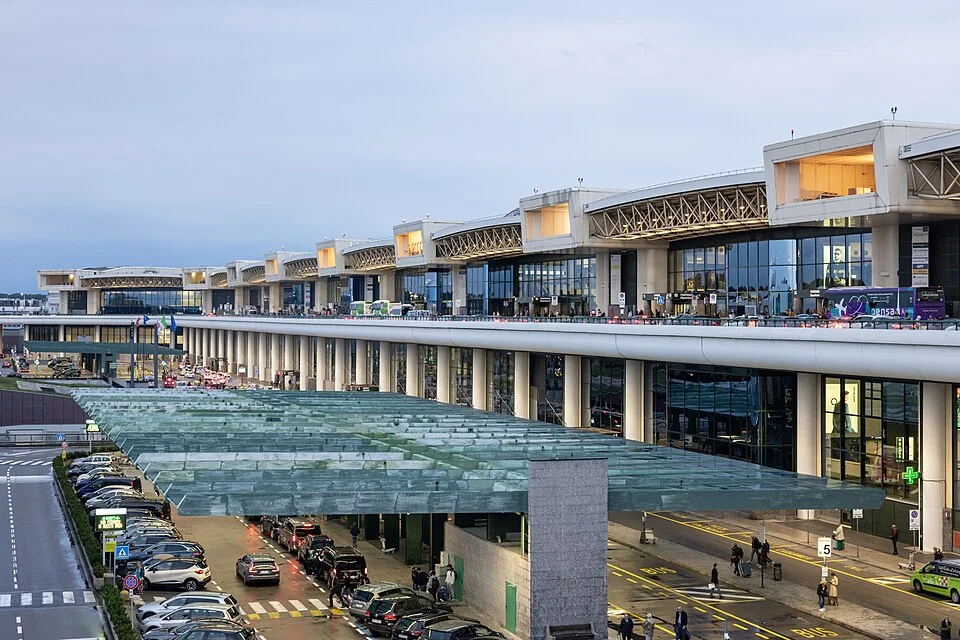
Many travellers make the common mistake of booking a round-trip ticket to Milan simply because it is the headline name of the event. However, since the venues are so far apart, flying into the wrong city could add unnecessary hours to your travel time.
To save time and money, you should pick your arrival airport based on which specific events you plan to watch first.
1. For Opening Ceremony & Ice Sports
Fly to Milan (MXP). If you are arriving from the US, India, or Asia, Milan Malpensa Airport (MXP) is likely your best option. It is the region’s main international hub and offers the easiest access to the city centre, where the ice hockey and figure skating events will take place.
- Travel Tip: The Malpensa Express train connects the airport to central Milan in just 50 minutes.
2. For Skiing & Mountain Events
Fly to Venice (VCE). Surprisingly, the nearest international airport to Cortina d’Ampezzo is not in Milan—it is actually Venice Marco Polo (VCE). Venice is located just two hours away from the Dolomites, making it a much faster gateway if you want to head straight to the slopes for the skiing competitions.
- Why choose this: You avoid the exhausting 5-hour transfer from Milan and get to the mountains much quicker.
3. The "Pro" Strategy
Book a Multi-City Ticket. Since the Olympic action moves from the city to the mountains, the smartest logistical move is to book a “Multi-City” (or Open-Jaw) ticket. You can fly into Milan to catch the Opening Ceremony and fly out of Venice after watching the mountain events. This saves you from having to backtrack 400km just to catch your return flight home.
How to Reach Milan City Centre
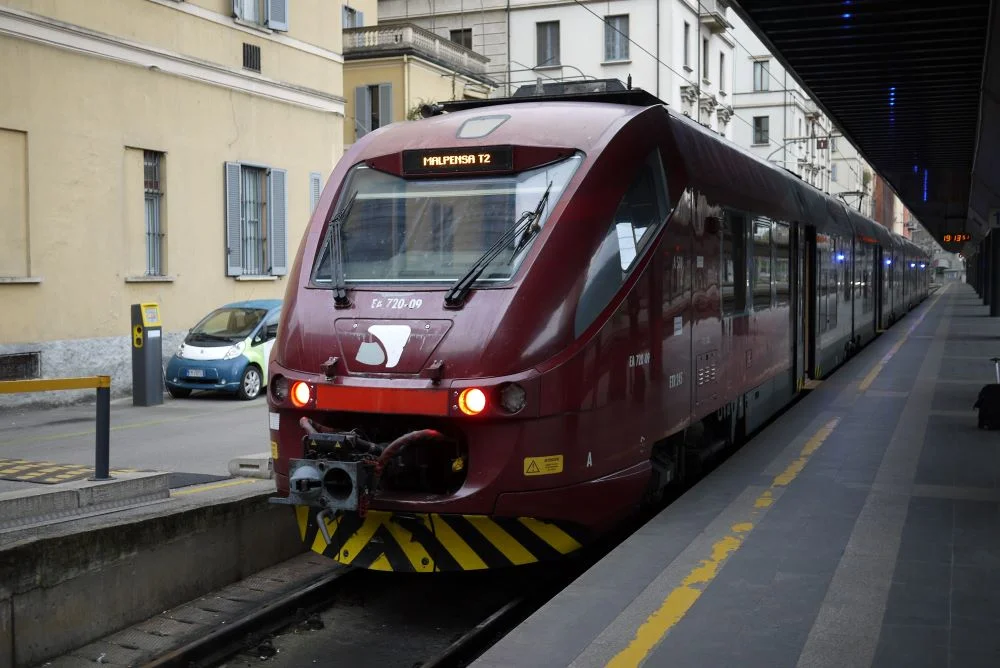
Once you touch down in Italy, the next mission is getting to your hotel. Milan has three different airports, but since most international long-haul flights land at Malpensa (MXP), we will focus on the smartest ways to get from there to the heart of the city.
1. The Fastest Option
The Malpensa Express (Train). If you value speed and comfort, skip the taxi line. The Malpensa Express train is, hands down, the best way to reach the city.
- Where to catch it: Follow the “Treni” signs in Terminal 1 or Terminal 2.
- The Route: It runs directly to Milano Centrale (the main station for connections) and Milano Cadorna (closer to the castle and historic centre).
- Time & Cost: The journey takes about 50 minutes and costs roughly €13. It’s reliable, punctual, and saves you from Milan’s notorious traffic.
2. The Budget Option
Airport Shuttle Bus. If you are travelling on a strict budget, the shuttle buses parked right outside the arrivals hall are a great alternative.
- Companies like Terravision or Malpensa Shuttle run frequently.
- Tickets are cheaper (around €10), but be warned: during rush hour, the travel time can easily stretch to over an hour due to highway traffic.
3. The "Expensive" Option
Taxi or Private Transfer. Taxis are available, but they are pricey. A ride to the city centre has a fixed fare (approx. €110), so make sure the driver doesn’t turn on the meter. Unless you have a lot of heavy luggage or a large group, the train is usually the smarter choice.
How to Reach Cortina d'Ampezzo (The Tricky Part)
This is where most travellers get confused. Unlike Milan, which is hyper-connected, Cortina d’Ampezzo does not have a train station.
You can’t just hop on a high-speed rail and step out at the ski lifts. The town is nestled deep in the Dolomite mountains, meaning the “last mile” of your journey will always involve wheels—either a bus or a car. Here is how to navigate the route without getting stranded:
1. The "Cortina Express" Bus (The Easiest Way)
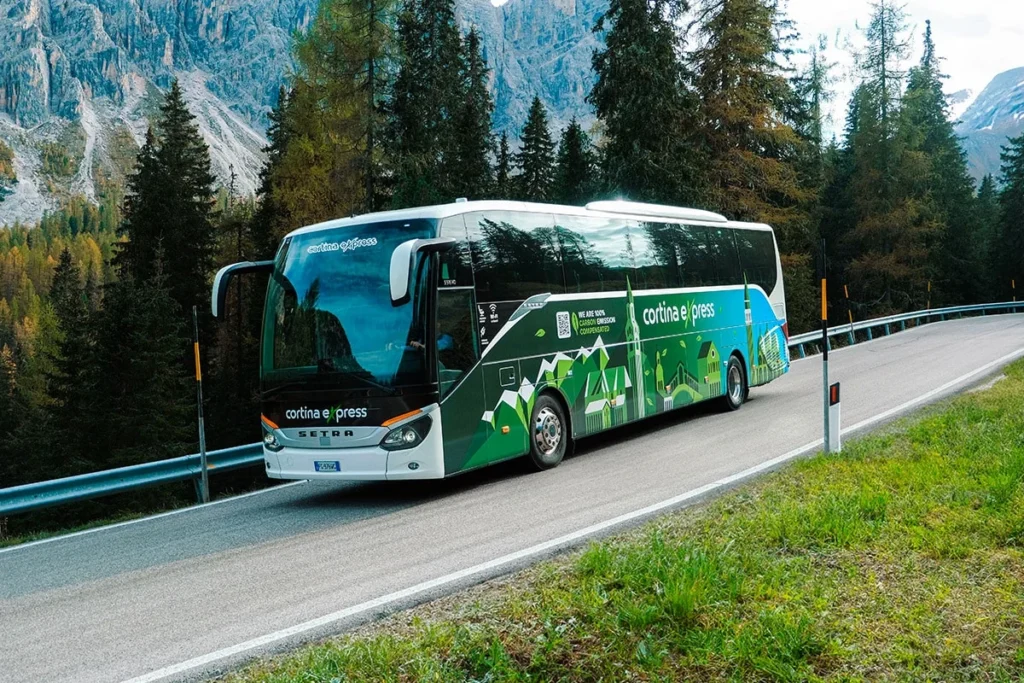
If you flew into Venice (VCE), this is your golden ticket. The Cortina Express (and ATVO) blue buses run directly from the airport arrival terminal to Cortina’s city centre.
- Why it’s the best: No transfers, no lugging bags between platforms. You just load your luggage and relax for about 2 hours while the scenery turns into a winter wonderland.
- Essential Tip: Since the Olympics are starting, book your tickets online in advance. These buses will be packed with spectators, and you don’t want to be left waiting in the cold.
2. The Train + Bus Combo (From Milan)
If you are coming from Milan, you have a longer journey ahead. There is no direct bus from Milan to Cortina. Instead, you will need to do a “Mix & Match”:
- Take a fast train to Venice Mestre OR a regional train to Calalzo di Cadore.
- From Calalzo, a connecting public bus (Dolomiti Bus) takes you the final 35km up the mountain.
- Heads up: This route is scenic but tiring (5+ hours). Only choose this if you love train rides or are on a strict budget.
3. Driving & Car Rentals (Read this carefully!)
Renting a car might seem like freedom, but during the 2026 Winter Games, it could be a headache.
- The ZTL Issue: Cortina has strict Limited Traffic Zones (ZTL). During the events, many roads near the venues will be closed to private cars.
- Winter Conditions: If you do drive, Italian law requires snow chains or winter tires on board. The mountain passes can be icy and treacherous in February.
- My Advice: Unless you are staying far outside the town, skip the rental car and stick to the shuttle buses. It saves you the stress of finding parking in a crowded Olympic village.
Travelling Between Milan and Cortina
Let’s be real: this is the biggest logistical hurdle of your trip. Since the Olympics are named “Milan-Cortina,” many visitors assume the two cities are neighbours. In reality, they are about 400 kilometres (250 miles) apart, and the journey is a bit of a trek.
If you plan to watch the Opening Ceremony in Milan and then head to the mountains for skiing, you cannot just take a quick Uber. Here is the smartest way to bridge the gap.
1. The Best Route
High-Speed Train + Bus. There is no direct train that goes all the way from Milan to Cortina. The most reliable and comfortable route is a two-step process:
- Leg 1: Take a high-speed Frecciarossa train from Milano Centrale to Venice Mestre station (approx. 2.5 hours). These trains are fast, have Wi-Fi, and are very comfortable.
- Leg 2: At Venice Mestre, switch to the Cortina Express bus (approx. 2 hours), which will take you straight up into the Dolomites.
- Why do this: It breaks the journey into manageable chunks and lets you rest.
2. The Private Transfer (Costly but Direct)
If you are travelling with a group or have heavy ski gear, booking a private car transfer is an option.
- It is the only way to go “door-to-door” without hauling luggage between platforms.
- The Catch: It is expensive (often €400+) and takes about 5 hours. However, you get to enjoy the stunning scenery without the stress of navigating schedules.
3. Important Reality Check
Don’t Do It as a Day Trip. Please do not attempt to visit Cortina as a “day trip” from Milan. By the time you reach the mountains, turn around, and come back, you will have spent 10+ hours in transit.
- My Advice: Treat these as two separate legs of your vacation. Spend a few days in the city, then move to the mountains (or vice versa) and stay there.
Quick Tips for Olympic Travelers
1. Download the “Milano Cortina 2026” App: Don’t rely on paper printouts. Your event tickets, transport updates, and venue maps will all be digital. Download the official app before you leave home to avoid struggling with airport Wi-Fi.
2. The “Two-Climate” Packing Rule: This is unique to this trip. Milan in February is often damp, grey, and rainy (around 5°C), while Cortina is crisp, sunny, and freezing (often -10°C). You need a waterproof trench coat for the city and heavy thermal layers for the mountains.
3. Validate Your Train Tickets: This is the #1 mistake tourists make in Italy. If you have a physical train ticket, you must stamp it in the little green/yellow machines before you board. If you forget, the conductor will fine you instantly, and “I didn’t know” won’t get you out of it.
4. Batteries Hate the Cold: Cold mountain air drains phone batteries incredibly fast. If you are heading to Cortina to film skiing, bring a high-capacity power bank. Keep your phone in an inside pocket close to your body heat when you aren’t using it.
5. Book Accommodation Yesterday: This isn’t a joke—lodging in Cortina is limited and fills up years in advance for big events. If the town is sold out, look at nearby villages like San Vito di Cadore; they are cheaper and just a short bus ride away.
Conclusion
The bottom line is this: The Milan-Cortina 2026 Winter Olympics are going to be spectacular, but they require a bit more strategy than your average holiday.
Don’t let the distance between the city and the mountains scare you off. Yes, it takes some effort to get from the fashion capital to the ski slopes, but that journey is part of the adventure. You get to experience the best of both worlds—the electric energy of Milan and the breathtaking, quiet beauty of the Dolomites—all in one trip.
The key to a smooth experience is simply booking early. Secure your “Cortina Express” bus tickets the moment your flights are confirmed, and you will be miles ahead of the crowd.
Enjoy the pasta in the city, the powder in the mountains, and the incredible journey in between!
Here you can also check Heligoland Archipelago in Germany
Frequently Asked Questions (FAQs) about How to reach Milan and Cortina d'Ampezzo
Q 1: Is there a direct train from Milan to Cortina d'Ampezzo?
The short answer is no. Cortina is high in the mountains and does not have a railway station. The train only goes as far as Calalzo di Cadore (about 35km away). From there, you must transfer to a bus to reach the ski resort.
Q 2: What is the nearest international airport to Cortina?
It is Venice Marco Polo (VCE). It takes about 2 hours to reach Cortina from Venice by bus. In comparison, driving from Milan takes nearly 5 hours. If your main goal is skiing, fly into Venice, not Milan.
Q 3: How much does a taxi cost from Milan to Cortina?
It is extremely expensive. A private transfer can cost anywhere between €400 to €600 one way. Unless you are splitting the cost with a large group, the bus or train is a much smarter financial choice.
Q 4: Can I drive to Cortina in a rental car?
You can, but it is risky in winter if you aren’t used to it. Italian law requires you to have winter tires or snow chains on board from November to April. Mountain roads can be icy, narrow, and winding. Plus, parking during the Olympics will be very difficult and expensive.
Q 5: Is there Uber in Cortina d'Ampezzo?
No. Uber is not available in the Dolomites. The town relies on local taxi services, which can be limited during peak times. It is better to rely on the dedicated Olympic shuttle buses or hotel transfers.
Q 6: How far apart are the Milan and Cortina venues?
They are roughly 420 km (260 miles) apart. By road, this is a 4.5 to 5-hour drive depending on traffic and weather. Do not plan to visit both locations in a single day!